
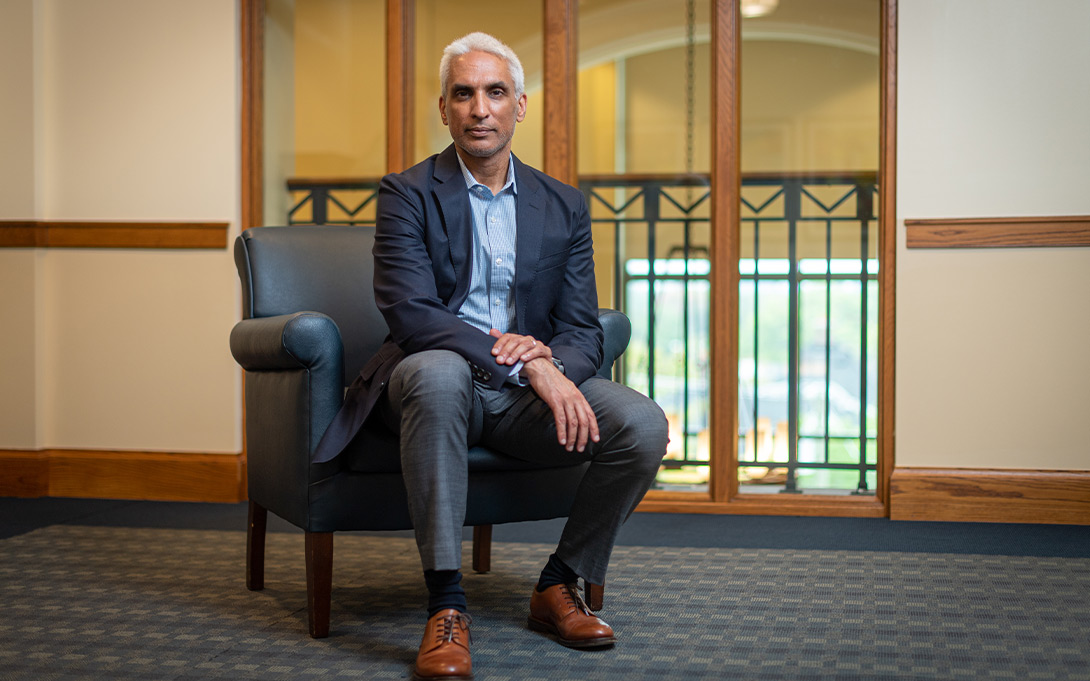
The latest US-Israeli military strikes in Iran have created an unprecedented crisis for the regime, writes Javed Ali. Unlike after the 2020 strike against Qasem Soleimani and last year's bombings of nuclear sites, Ali does not expect Iran to show restraint in its response.
The former National Security Council senior official from the first Trump administration writes in The Conversation, "I believe the calculus both in Washington and more so in Tehran is very different from earlier confrontations: Iran's leaders almost certainly see this as an existential threat given President Donald Trump's statement and the military campaign already underway. And there appears to be no obvious off-ramp to avoid further escalation."
In his analysis, Ali makes his assessment of how we got here and what to expect next. He points to breakdown in the Geneva talks as a catalyst, and Iran's ballistic missile program as a major strategic focus for the U.S. and Israel. Without a nuclear weapon, Iran's ballistic missiles pose the greatest threat to the region. In this particular conflict, Ali notes, they have already been used for strikes in the United Arab Emirates, Qatar, Kuwait and Bahrain. While the 12-day war with Israel may have depleted its stock, it is clear that Iran still has military capability—and intends to use it.
President Trump made it clear in his recorded video address following the initial strikes that regime change is the goal. The deaths of Ayatollah Ali Khamenei and other high-ranking Iranian officials have already been confirmed. Ali writes, "Now the gloves are off, and each side will be trying to land a knockout blow. . .Iran's leadership will be looking for something that goes beyond its previous retaliatory strikes – and that likely means American deaths."
Ali writes that Trump has made three gambles in his decision to use military force. First, he did so without authorization of force from Congress, which limits his options moving forward. Second, he is betting that the Iranian people have the will to overthrow their own government despite previously violent crackdowns on protests. Finally, he's wagered that Iran does not have the resources to fight in a lengthy conflict.
Iran should be expected to utilize every weapon and relationship at its disposal in this fight, says Ali—including exhausting its own weapons supplies and leveraging its proxy networks. Whether President Trump's objectives will be achieved and how long it could take remains to be seen. In the meantime, do not expect Iran to show restraint in its response.

