
Leadership development
Develop the skills to lead meaningful change
You have the capacity to make a positive impact on organizations, communities, and the people around you. But leadership does not "just happen." It is a set of behaviors you can learn, practice, and strengthen.
At the Ford School, you will pair rigorous policy analysis with the leadership skills to navigate complexity, build coalitions, communicate across differences, and turn ideas into action. Leadership development is woven through your experience at the Ford School—in the classroom and beyond it.
Leadership doesn't come by title. You don't have to be the head of an organization to have an impact." -Morela Hernandez, Ligia Ramirez de Reynolds Collegiate Professor of Public Policy


Growing as a leader requires developing self-awareness. Multiple opportunities at the Ford School allow us to build intentionality and transform the way we lead, learn, serve, communicate and collaborate in teams."
-Clary Baudraz (MPP '21)
Build the capabilities public leadership requires
Communicate ideas that move people
Learn directly from public leaders
Put policy—and leadership—into practice
Engage constructively across differences
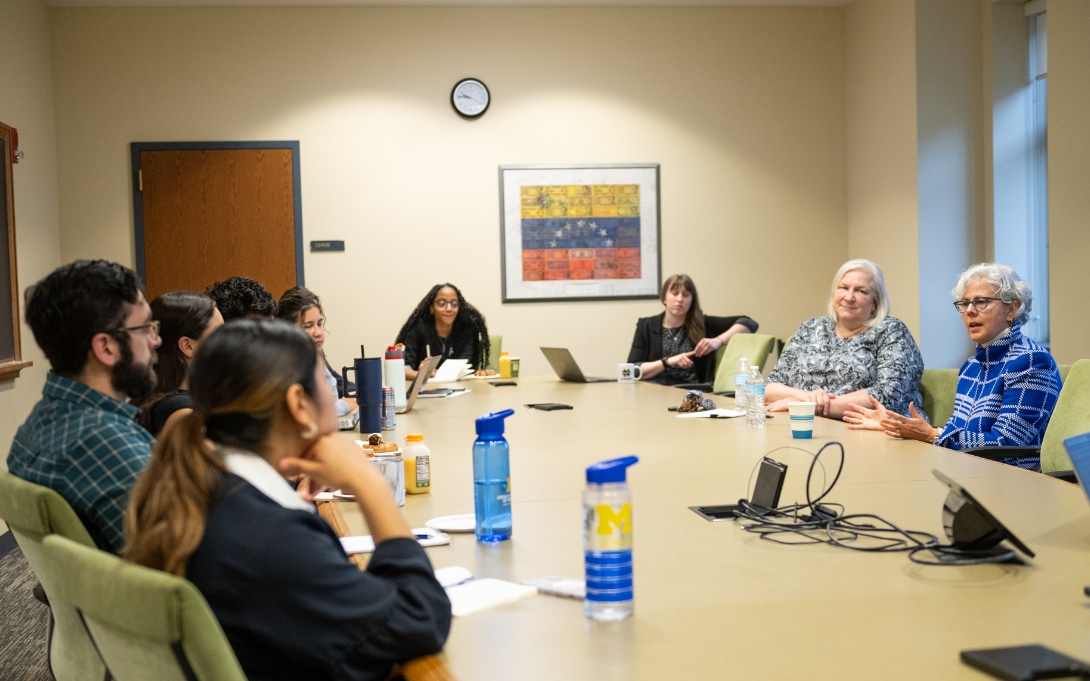
In a small-group conversation, Cecilia Muñoz discussed her career journey, reflected on lessons from her time in government, and explained how she sustains hope while working on difficult public challenges.
See conversation across differences in action
Bipartisan leaders discuss what it takes to build trust across political divides
What sustains democratic trust when political disagreements remain unresolved? At two Ford School events during the University of Michigan’s Democracy Week, current and former Democratic and Republican elected leaders pointed to local participation, civic education, careful listening, and relationships across ideological lines.
Finish reading


