
Community water fluoridation (CWF), a longstanding practice of adding fluoride in community water systems to prevent cavities, has been the subject of nationwide controversy after Utah and Florida banned the policy statewide in 2025. In their decisions, government officials cited research linking CWF to decreased adolescent IQ.
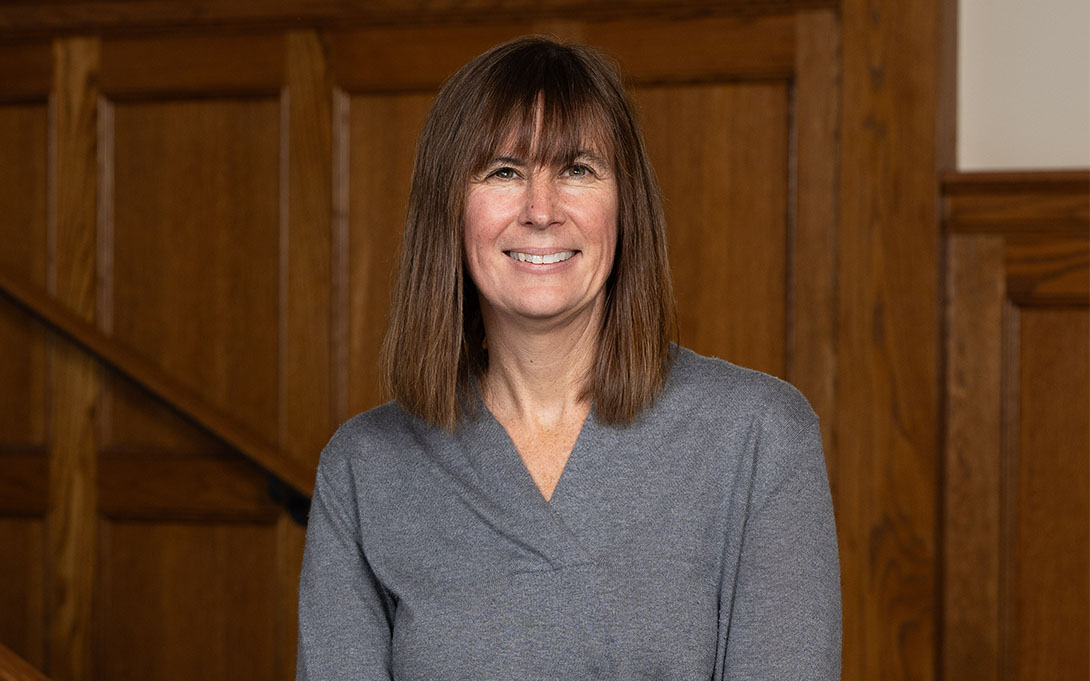
But new research from Pamela Herd, the Ford School's Carol Kakalec Kohn Professor of Social Policy, shows no negative relationship between CWF and adolescent or adult cognitive function.
The first-of-its-kind study, published in the Proceedings of the National Academy of Sciences, used representative data from the Wisconsin Longitudinal Study to assess adult cognitive function, testing data from the state of Wisconsin to assess adolescent IQ, and historical records to determine exposure to CWF. Herd and her co-authors tracked the cognitive function of individuals exposed to CWF throughout their lifetimes and compared their results to those of individuals who were never exposed.
"[P]articipants exposed to CWF did not perform significantly worse (or better) than their peers who were never exposed," the authors said. "[T]his is true regardless of the age at which cognition was assessed and regardless of whether we restrict the sample to participants who did not move since ages 11 or 1."
The research has already informed public opinion. Herd's work has been featured in stories in over fifty news outlets, including:
- NBC News: "Fluoride in drinking water has no effect on IQ or brain function, long-term study shows"
- ABC News: "Fluoride in drinking water has no negative effect on IQ or cognitive function, study says"
- Healthline, AOL: "Fluoride in Drinking Water Has No Effect on IQ or Brain Function, Study Finds"
- USA Today: "RFK Jr. has tied fluoride with 'stupider' kids. What a new study says"
Herd's coauthors were John Robert Warren (University of Minnesota–Minneapolis), Gina Rumore (University of Minnesota–Minneapolis), Kamil Sicinski (University of Wisconsin–Madison), and Michal Engelman (University of Wisconsin–Madison).
