
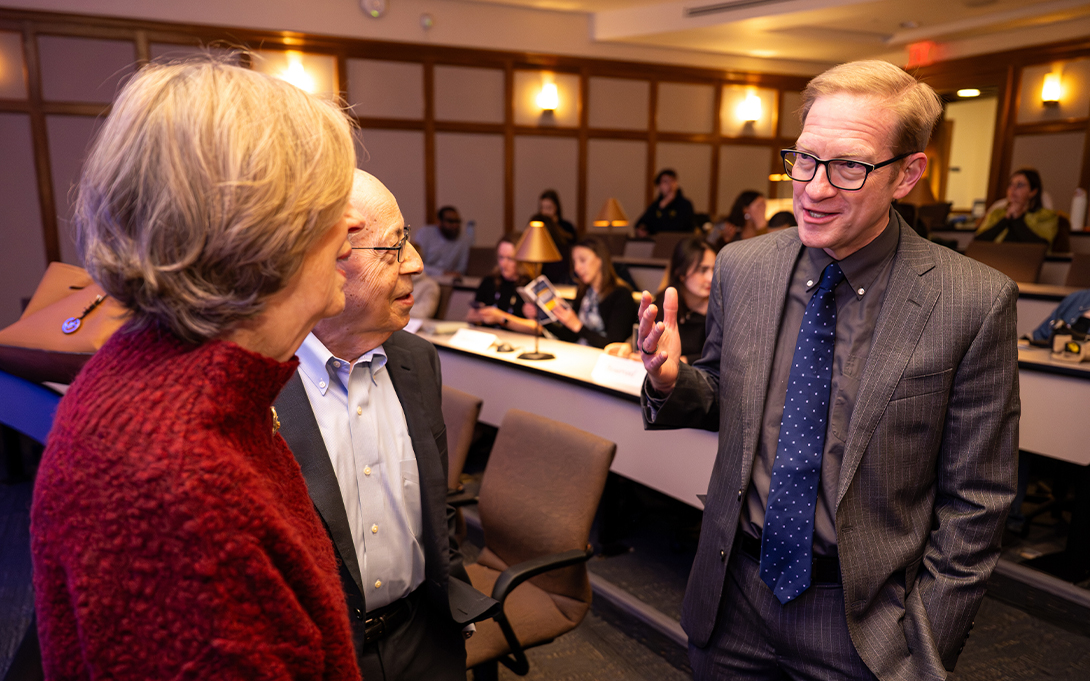
How might emergency powers be used to interfere with elections—and what safeguards stand in the way?
At Michigan Law's recent "Emergency Powers and the Election" panel, Professor Barb McQuade moderated a discussion with Professors Sam Bagenstos, Leah Litman, and Julian Davis Mortenson about the limits of executive authority and protections for voters.
The panelists covered four themes: potential uses and limits of emergency powers, the role of election monitors, state and congressional authority over elections, and reasons for both concern and hope.
Bagenstos, the Arlene Susan Kohn Professor of Social Policy and Frank G. Millard Professor of Law, drew a distinction between what a president might attempt and what the law allows. "There is no authority simply to seize ballots or to seize voting machines," he said. He also pointed to reasons for hope, including state election officials' readiness to push back against interference and a broader commitment to protecting voting rights.
"What gives me hope is there are a whole lot of people who I might not agree with on a whole lot of political issues who will be really upset if something happens to try to take away people's right to vote."
Read more key takeaways from the event, written by Allison Torres Burtka for Michigan Law.
>>Continue the conversation: Professor McQuade will join Ford School faculty on Nov. 5 for After the Vote, a community gathering to unpack the election results and what comes next. The event is open to U-M students, faculty, and staff. Click here for details and registration.
