
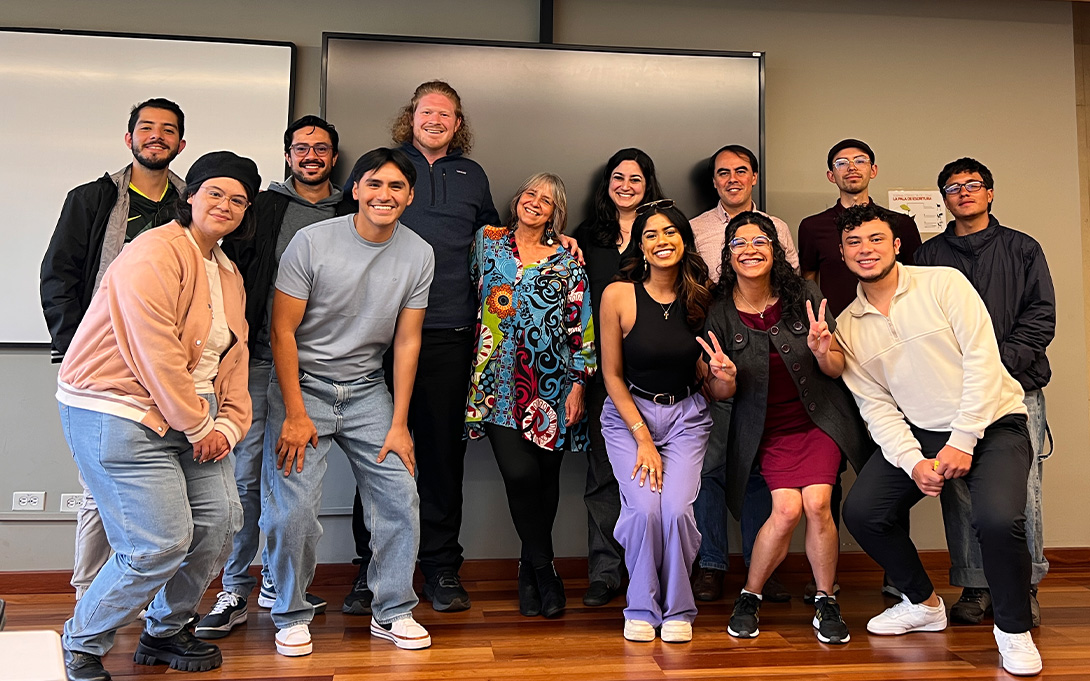
In March 2026, a delegation of graduate students from the University of Michigan's Ford School of Public Policy traveled to Bogotá, Colombia, to learn about the practical realities of international development policy and programs from key stakeholders. A key part of their experience included an academic and applied policy exchange with the National University of Colombia's Observatory of Food Security, Food Sovereignty and Nutrition, known as OBSSAN.
The trip was part of the Ford School's International Policy in Practice (IPIP) course, an annual applied learning experience administered by the school's International Policy Center. The IPIP program at the Ford School and OBSSAN are planning another interactive exchange for March 2027.
The exchange with faculty and students from OBSSAN at the National University of Colombia offered students a chance to learn how the observatory collaborates with communities, public institutions, and other organizations to advance food security and sovereignty across Colombia.
Over the course of their visit, students:
- Discussed OBSSAN's current research and applied extension work with local communities during cross-disciplinary conversations led by OBSSAN Director and Associate Professor Dr. Sara Eloísa del Castillo Matamoros.
- Explored the Bogotá Botanical Garden to learn about the city's food security initiatives.
- Toured an urban working garden and spoke with a farmer and community leader about her experiences.

Through these activities, students learned how OBSSAN scholars are approaching food security and sovereignty research and engaged with current debates surrounding the human right to food. They also saw firsthand the connections among academic research, policy and program implementation, and the experiences of the communities these programs are intended to serve.
"The opportunity to learn about applied policy research and the Observatory's extension work with communities across the country was invaluable for our students," said Dr. Amy Beck Harris, who led the Ford School course. "The experience taught them quite a bit about understanding programs from multiple points of view and the ‘right' questions to ask when seeking to understand the impacts of public programs."
Students were eager to compare policy approaches across national contexts and reflect on how community-based knowledge can inform public policy.
Dr. Harris reflected, "The opportunity to collaborate with and learn from the OBSSAN community of scholars, who are such dedicated and bright researchers and educators, was a highlight of our 2026 experience abroad."
