
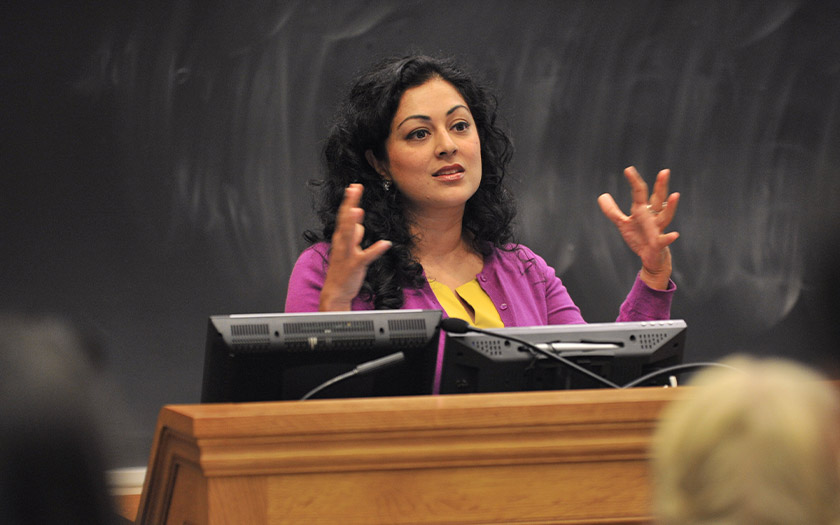
In her second column for Science, Ford School Professor Shobita Parthasarathy argues that rather than treating the growing crisis of public trust as an information and communication problem, we should treat it as an innovation and expertise problem. Taking lessons from India and South Korea, she suggests that U.S.-based university scientists and engineers should adopt a more inclusive approach that is more comprehensive, interdisciplinary, and grounded in community.
Parthasarathy explains:
"India officially values "grassroots innovations" developed by those who may lack credentialed knowledge and money, but who have important insights and skills that enable them to develop useful solutions to the problems that they and their communities face. And, after the MERS epidemic, South Korea set up a coordinated strategy linking research into diagnostic testing for infectious disease, patient care, and epidemiological surveillance. As a result, not only did it quickly launch diagnostic testing for COVID but few people died from the disease.
How can we reimagine innovation as a collective enterprise grounded in community? Scientists and engineers can build closer relationships with local populations and help develop their grassroots innovations. They must approach communities with humility and respect, and credit their contributions.
They can also take on the responsibility to proactively address some of innovation's problems. They could collaborate with colleagues in the humanities and social sciences, who can help them anticipate and proactively address the potential harms of their technologies. They could engage with commercialization offices on their campuses to ensure that the companies who license and further develop their technologies adhere to particular values, keep prices low, and maintain repair infrastructure even when a device goes obsolete. And they might cooperate with civil society groups and governments to ensure proper guardrails on their technologies and develop contingency plans to manage harms. The bottom line is that to repair public trust, we likely need new ways of thinking about science, expertise, and society."
Read: "Repairing trust in science requires a more inclusive understanding of innovation"
In case you missed it, here is her last (first) piece, "Beware the Drive to Scale Technology", published in September.
