
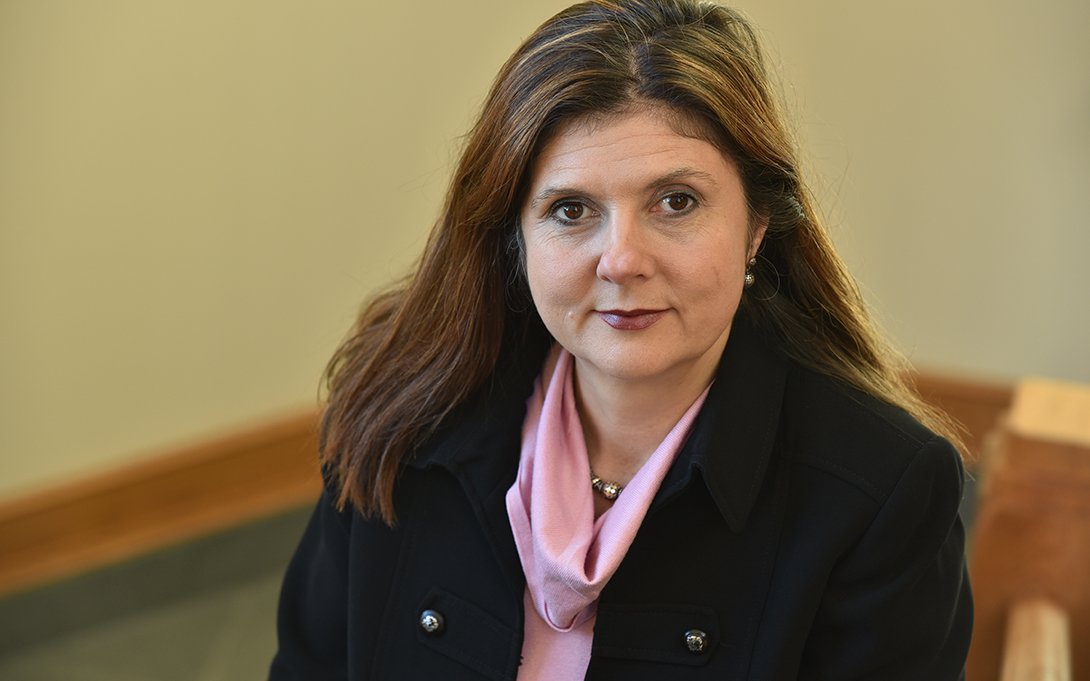
Ford School labor economist Betsey Stevenson was recently featured in the International Monetary Fund's series on Extraordinary Women in Economics, where she highlighted how economic conditions and policy decisions shape family life. Speaking with Rhoda Metcalfe, Stevenson emphasized the impact of the COVID-19 pandemic, describing how it redefined the boundaries between work and home.
"Parents, both men and women, are roughly participating in the labor force at the same rates they were prior to the pandemic," Stevenson said. "Optimistically, I would argue that we may have seen a deepening of gender equality in the home. Fathers had a chance to see what women do, up close and personal, and many started to think about time with their kids."
Still, the burden of caregiving remained uneven, with women more likely to quit their jobs altogether due to remote schooling and childcare needs. Stevenson explained the concept of "greedy jobs," or positions that demand near constant availability, as barriers to gender equity. Women are typically penalised by the existence of many greedy jobs because they are expected to handle the bulk of domestic duties, and have to find jobs that offer more flexibility and respect for boundaries. She argues that since the pandemic, men's tolerance for greedy jobs is going down.
"I think things will never really get better for women until men say, "No, I'm not going to be on call 24-7. I have other things I have to do," explained Stevenson. "Women are already paying for flexibility, they're already turning down higher paying jobs that have those boundaries. I think adding a new option to the table, a job that also has work from home, actually will shrink the gender wage gap."
Policy, Stevenson emphasized, plays a powerful role in shaping family decisionmaking, outcomes, and relationship dynamics. "If we have a maternity leave policy with no paternity leave policy, dads are less involved. If we have a use-it-or-lose-it paternity leave policy, dads are more involved," she said. "It's important that we understand when we're making policy choices we could end up shaping how someone lives their whole life for better or for worse."
Looking ahead, Stevenson is interested in understanding how families are recalibrating after the pandemic.
"What is the best way in which policymakers can facilitate not just more gender equality, but people being able to take advantage of the fact that we live in such a wealthy society and to live a life that's more full of joy?" she said. "There is a path forward that is brighter, lighter, and stronger, but it's going to take some work to get there."
