
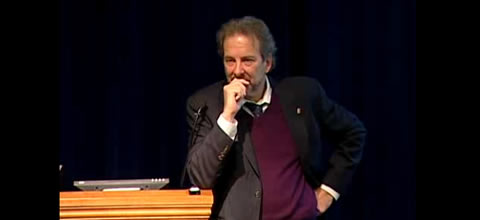
A recent surge in global conflicts has prompted many scholars and policymakers to ask: what determines victory in war? In a recent opinion essay, anthropologist Scott Atran argues that the decisive factor is often not superior firepower, but the presence of "devoted actors," people whose personal identity is fused with a group's collective identity and anchored in non-negotiable values and belief systems. Such actors, he writes, are willing to sustain extreme sacrifice to achieve their aims. Atran first introduced this framework in a 2010 briefing to the U.S. National Security Council.
Published in Small Wars Journal (Arizona State University), Atran's analysis draws on behavioral and brain research and a range of contemporary and historical cases to illustrate why strategies centered on overwhelming force can miscalculate how violence will be interpreted within a society.
Atran points to cases in which large-scale attacks did not produce capitulation, including the German Blitz on London, U.S. bombing in North Korea, and recent. strikes on Ukrainian cities. He argues that once the initial shock fails, destruction of infrastructure or leadership decapitation often strengthens cohesion, removes potential interlocutors, and tightens the bond between regimes and populations.
Applying this framework to the U.S. conflict with Iran, Atran writes that while many Iranians do not appear to share the regime's commitment to nuclear proliferation, he argues, the "devoted actors" of the Iranian Revolutionary Guard and powerful religious advisors can shape strategy and endure prolonged hardship.
"The identity fusion of Iran's Revolutionary Guard, forged in the Iran–Iraq War, anchors this posture," writes Atran. "The shared ordeal created bonds of solidarity not easily eroded by external pressure; for those who survived, the current struggle is experienced not as a new crisis but as a continuation of an existential test already endured."
Read Atran's opinion, "Why the Strong Lose and the Weak Become Strong."
