
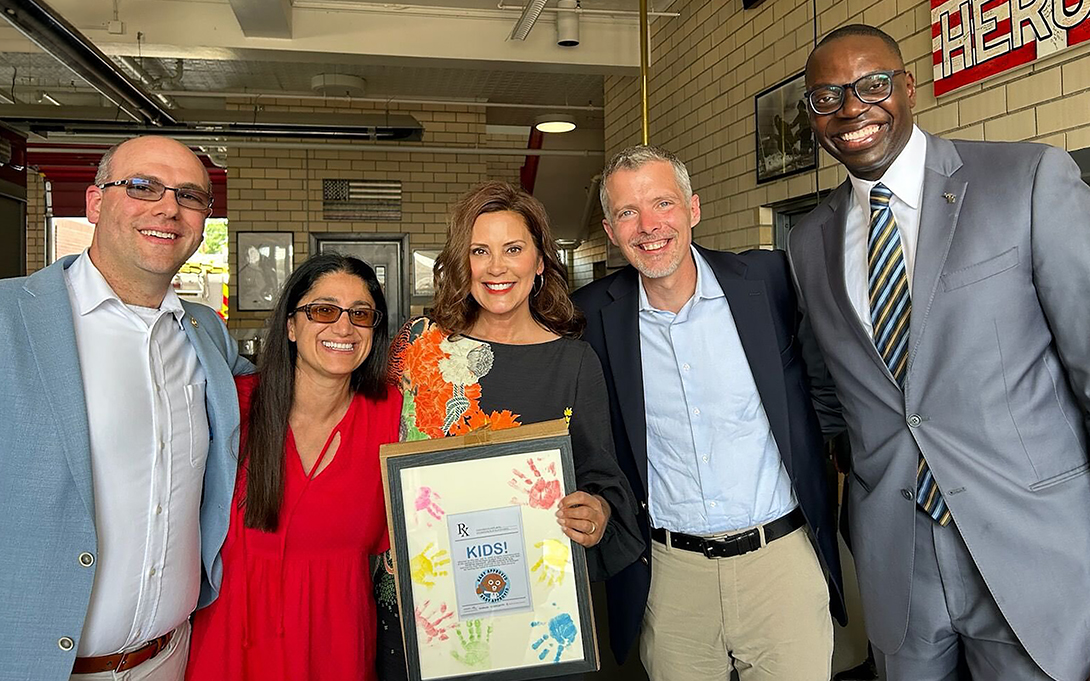
Rx Kids is the nation's first-ever community-wide prenatal and infant cash 'prescription' program. It provides life-changing financial security that is universal and unconditional to those in eligible communities. Moms receive $1,500 during pregnancy, and receive $500 per month for first 6-12 months after the birth of a child. Launched in Flint, MI in 2024, the program has expanded to other communities across the state, distributing nearly $20 million to more than 4,300 families in cities like Kalamazoo and Pontiac, as well as in rural counties like Clare and those in the Eastern Upper Peninsula.
Why it matters
Studies show that families are the poorest they’ll ever be on average right when they’re bringing a new baby into the world—the most important time for infant development. Rx Kids not only provides additional financial security to families, but it also allows them to spend that money how they need—whether it be childcare, rent, transportation, baby supplies, food, healthcare, etc.

Research results show that this program is not only helping families, but also communities.
- In Flint after Rx Kids was implemented, evictions fell 4.2 percentage points relative to comparisons, and families were less likely to owe back payments for housing.
- Infant health improved: there was an 18% reduction in preterm babies, 27% reduction in low birth weight babies, and a 29% reduction in NICU stays compared to births in mid-sized, high poverty cities across Michigan
-

New mothers with access to Rx Kids saw a 14.0 percentage point reduction in screening positive for postpartum depression, relative to comparisons.
-

Researchers calculated up to $6.2 million in estimated healthcare savings based on improved birth outcomes annually just in Flint.
-

The Upjohn Institute for Employment Research issued a report that found that Rx Kids cash prescriptions led to an estimated 100 to 200 additional jobs in Michigan annually and generated between $15 million and $40 million in additional personal income per year from $10 million in cash prescriptions.
Why it works
The program is successful because it’s designed to be simple, universal, and unconditional— based on the success of child cash transfer programs globally and the success of the expanded Child Tax Credit
Rx Kids is a game-changer for rural families in the Eastern Upper Peninsula. In just six months, we’ve seen how targeted, local investment can strengthen families and improve health outcomes. As I’ve shared with my colleagues in the Legislature, this program is about empowering parents, respecting personal responsibility, and delivering real results where they’re needed most.”
State Senator John Damoose (R-37)
The program is run by the Michigan State University Pediatric Public Health Initiative, in collaboration with Poverty Solutions at the University of Michigan, and administered by GiveDirectly, a philanthropic nonprofit.
Funding for the program is diverse: it includes public sources, including a novel use of TANF (Temporary Assistance for Needy Families) and other state or federal dollars, but also private support from philanthropy, local businesses, and health care systems. Because of its simple design, it is easy to administer both in urban and rural areas, and notably has high uptake rates that approach 100% of eligible families, which is very high compared to many other anti-poverty programs.
What’s next
In October 2025, the State of Michigan committed $270M to the program, which is expected to reach nearly 100,000 babies over the next three years, or about one-third of all births in the state.
Written by Karissa Knapp
Related fall 2025 State & Hill stories
 Detroiters speak—and leaders listen
  Weiland’s policy-driven research brings proven results to classrooms across the U.S.
 ← Read all stories in the fall 2025 edition State & Hill

