
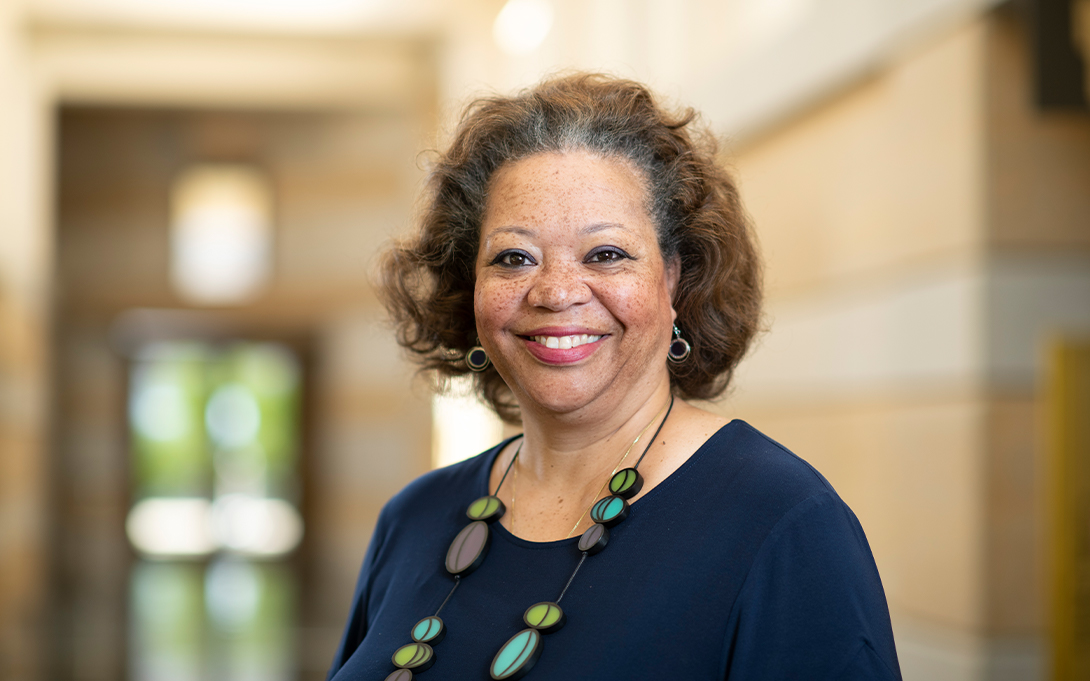
At the World Affairs Council of Connecticut's International Women's Day virtual celebration, Ambassador Susan Page, professor of practice at the Ford School and the U-M Law School and director of the Weiser Diplomacy Center, shared experiences as ambassador to South Sudan.
After helping negotiate the 2005 Sudanese Comprehensive Peace Agreement, a direct catalyst for South Sudanese independence, Page helped establish American credibility in the aftermath of a years-long civil war as the first U.S. ambassador to South Sudan. She traveled across the country to talk with local communities, an experience she believes helped inform her diplomacy efforts to the newly established nation.
"People were thrilled to have someone coming to see them and talk to them and have their voices heard," Page remarked. "To be the representative of the U.S. government in the country was incredible and a real privilege and honor."
Page also discussed the role of women in leadership around the globe. She noted many areas of the world–including in conflict-affected countries such as Ukraine–where women have taken on high-profile leadership roles. However, she observed that systemic change is still needed to ensure women have true political and decision-making power. In post-conflict reconstruction areas, women often hold leadership positions during the negotiation and aid distribution processes, but are pushed out of power when political dispensation is reached.
"We don't want window dressing. We want women to actually have a real voice. And so that means we have to examine our systems, our institutions and that's where those institutions need to be strengthened," Page said. "It's not about allowing a woman to do something. It is her right to do exactly what she wants to do and [it's about] having an institutional ability to do that."
Watch the World Affair Council's Q&A with Ambassador Page here.
