
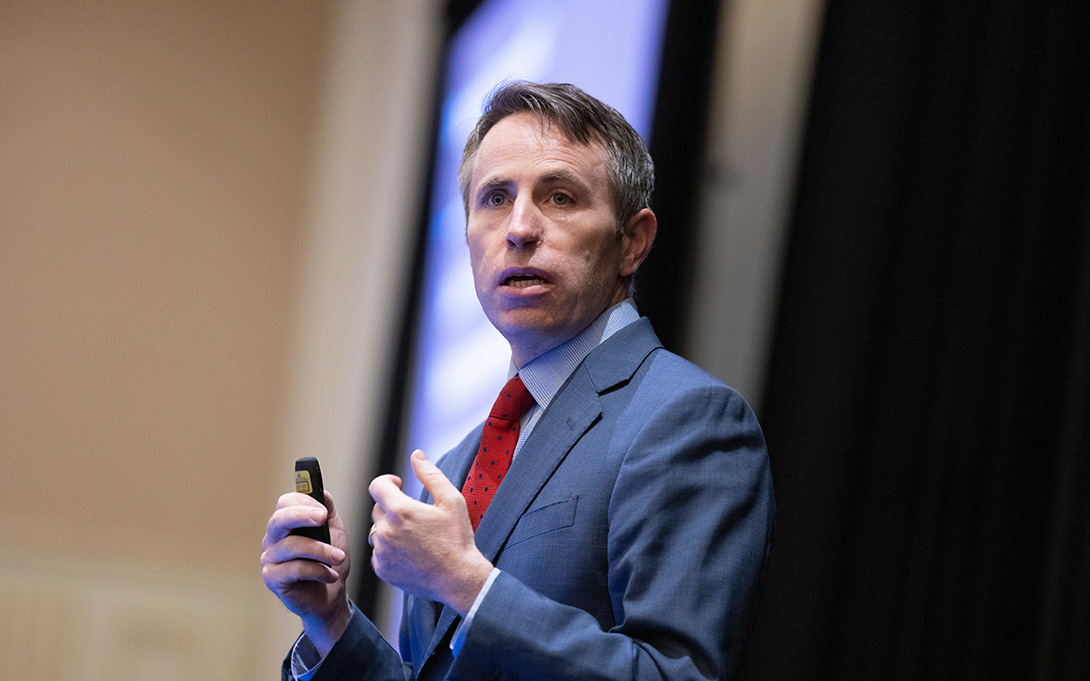
The extreme politicization that Trump has already brought to government will grow worse if the president is legally able to fire tens of thousands more people for any reason, says Don Moynihan, professor at the University of Michigan's Ford School of Public Policy.
"It creates bubbles around policymakers," he says. "If you were a career civil servant and there is bad news that you want to share with the president, you're less likely to do so if you think, 'The minute I share that bad news, I'm going to get fired.'"
Since the 1960s, the federal government has gathered demographic data from employers as part of its efforts to root out discrimination in employment.
Moynihan says this is not an abstract idea. He points to what's happened with political appointees — who lack civil service protections — who raise the president's ire: The head of the Defense Intelligence Agency was fired after the agency issued a preliminary report last year contradicting Trump's assessment that U.S. airstrikes had "completely and totally obliterated" Iran's nuclear enrichment facilities. The commissioner of the Bureau of Labor Statistics, who had previously served as a career economist in the government for more than two decades, was ridiculed and then replaced by Trump after a disappointing jobs report.
Moynihan believes ongoing litigation is one reason the Trump administration has started by reclassifying only a relatively small number of positions.
"By starting with more defensible policy-making roles, they are more likely to win in court," he wrote on his blog back in February. "Once they do, and the rule is cemented as law, they can always broaden its reach, deeper and deeper into the administration."
He predicts the issue will ultimately be decided by the Supreme Court.
"This is a swing-for-the-fences moment on the part of the administration, where they look at this Supreme Court and think this is the most friendly court that we are going to get on this topic," he says, pointing to a number of emergency orders issued by the Supreme Court last year that have allowed controversial firings to stand while litigation continues.
