
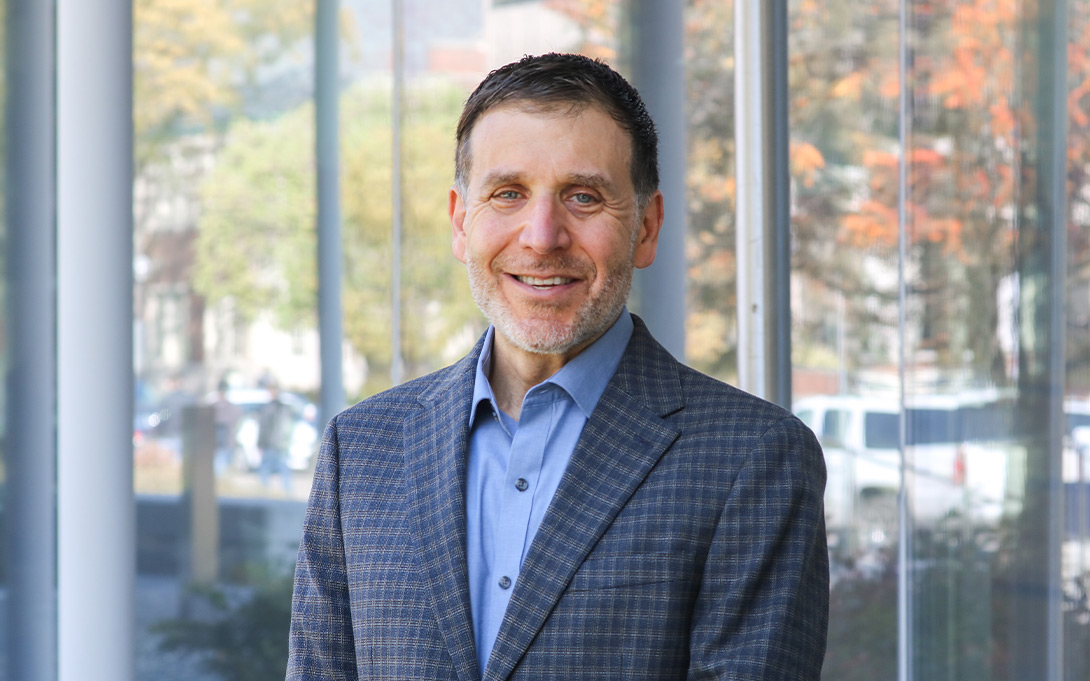
This winter, twelve Ford School students stepped into paid consulting roles, working on three projects that support local governments in Michigan and beyond. State & Hill spoke with Jeffrey Morenoff, associate dean of research and policy engagement, about what the pilot initiative means for government partners and student professional development.
Why launch the Consulting Clinic now? What makes it different from previous consulting initiatives?
Many local governments are strapped for bandwidth to address anything beyond day-to-day operations. At the same time, these agencies are innovating to meet growing and changing community needs. We see an opportunity to help them advance strategic initiatives that might otherwise remain on the back burner, and local government agencies are eager for support.

For students, the government job market is tightening, especially at the federal level. The Clinic exposes them to new avenues for fulfilling public service careers. Previous consulting initiatives at the Ford School were linked to courses or independent studies. The Clinic, in contrast, is set up to be a professional environment; we interviewed a strong group of students in December, welcomed 12 at orientation in January, and divided the cohort into three project teams—each led by a student with additional leadership responsibilities.
Although this is a pilot, our goal is to provide high-quality, actionable support that aids government decision-making and gives students the experience and confidence to tackle public policy challenges in their careers.
How do student consulting teams help local governments?
Many local governments must be creative in generating new revenue, ensuring transparency, and communicating effectively with residents about how tax dollars are spent. They may also need support for initiatives addressing complex issues like housing affordability, utilities, and the environment. Our student teams offer additional capacity and expertise to research best practices, gather and analyze data, and present findings in ways that inform and engage the public. In the long term, the goal is to help establish the Ford School as a go-to source for supporting strategic initiatives.
What skills and career experience will students gain?
Policy consulting in government is as much art as science. It requires adaptation and improvisation: projects change, scope creeps, and new challenges emerge. While these pressures are hard to simulate in the classroom, the Clinic places students directly at the intersection of policy and practice. They learn to navigate team dynamics, respond to unexpected turns, communicate complex information to stakeholders, and work under real deadlines—skills that make them more marketable to any employer.
How are students making an impact?
One team worked with a local government in the Chicagoland area that was struggling to attract new businesses, particularly restaurants. The students researched the effectiveness of tools like tax credits and grants, interviewed local stakeholders, and surveyed business owners in the area.
The team helped their client understand the importance of transparent communication with the public about available programs and how to access them. Students advised the city to be cautious about relying solely on the types of tax incentives and grants they were offering, as evidence for their effectiveness is limited. They also highlighted that such research often overlooks intangible benefits—like the way restaurants contribute to community vibrancy and quality of life. The students discovered that attracting these amenities isn't just about financial returns; it can shape a town's appeal and even influence its competitiveness with neighboring communities.
What's the best way to get involved?
We currently offer skill-building workshops and panel discussions for Clinic students, and in the future, we hope to engage alumni and friends—particularly those with consulting or government experience—through these events. We welcome feedback from the wider Ford School community to help us improve the Clinic, as well as ideas for new clients and student career development. We encourage you to reach out ([email protected]) about future project partnerships in Michigan.
Related spring 2026 State & Hill stories
← Read all stories in the spring 2026 edition State & Hill
