
A good book doesn't just give you information—it changes what you notice.
It can make a place feel real, show you how systems land in daily life, and give you something worth talking about. And it's the "worth talking about" part that brings us into the Community Read again this year.
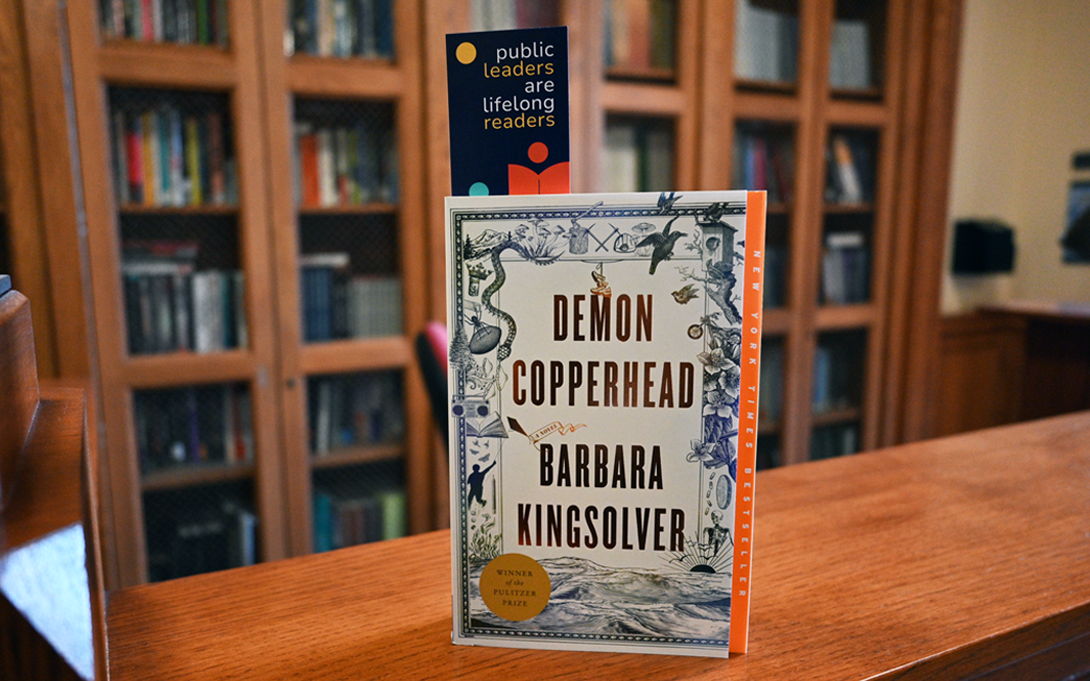
This year, we're reading Demon Copperhead by Barbara Kingsolver. The novel follows a young boy growing up in Appalachia as he confronts poverty, foster care, addiction, and the opioid crisis, and the stereotypes often attached to rural communities. Where last year's selection, Abundance by Ezra Klein and Derek Thompson, invited a bird's-eye view of systems and structures, Demon Copperhead brings us close to lived experience and shows how policies and institutions shape the daily realities of individuals and communities.
If you're new to Community Read, the idea is simple: we read the same book, then we talk about it—across events, classrooms, and conversations throughout the academic year.
I have helped support the Ford School Community Read initiative over the past two years. One of the most rewarding parts of the program is working with colleagues across the Ford School, including the strategic planning team, the Dean's Office, MarCom, administrative partners, and members of the Alumni Board, to ideate and design programming tied to each year's book selection. What I enjoy most is seeing how a single text creates a shared experience across the Ford School. Students are introduced to the book over the summer and again during orientation. Faculty can integrate content from a reading companion in course discussions. And the themes often carry over into events and informal conversations well beyond the book itself.

Policy students spend a lot of time learning how systems work. Demon Copperhead shifts that focus, reminding us that those systems ultimately affect real people and communities in tangible ways. It's not lost on me that themes from Demon Copperhead are not distant issues for many. Some may even recognize these realities from their own communities or lived experiences. Stories like Demon Copperhead help ground policy conversations in empathy and humanity, showing how decisions made in institutions can shape the course of individual lives.
Another highlight of the Community Read is the opportunity to hear directly from the author(s). Listening to authors talk about how their books came to life—what motivated them, what research they conducted, and what questions they hoped readers will grapple with—adds another layer to the experience. Conversations with book authors turn reading into a broader dialogue about ideas and the role narrative storytelling can play in shaping how we understand policy issues.
At its best, the Community Read creates space for the Ford School community to pause, reflect, and engage with big ideas together. In a place where policy conversations often begin with data and analysis, a shared reading experience offers another perspective: one that reminds us that public policy ultimately shapes the lives of people and communities.
If you're able to read along this year, I hope you'll join us. Read the whole book, read a few chapters, or come to an event just to listen either way, you'll have a place in the conversation.
Want to learn more or get involved? Contact [email protected].
By Stephanie Sanders
