
Michigan has long been a destination for hazardous and nuclear waste shipped in from other states—a trend driven by Michigan's comparatively low disposal fees. The debate has drawn sharp lines between local municipalities and advocates, who warn against increased risks and burdens placed on residents, first responders, local government, and business interests, who argue that stricter regulations would harm the state's economy and workforce.
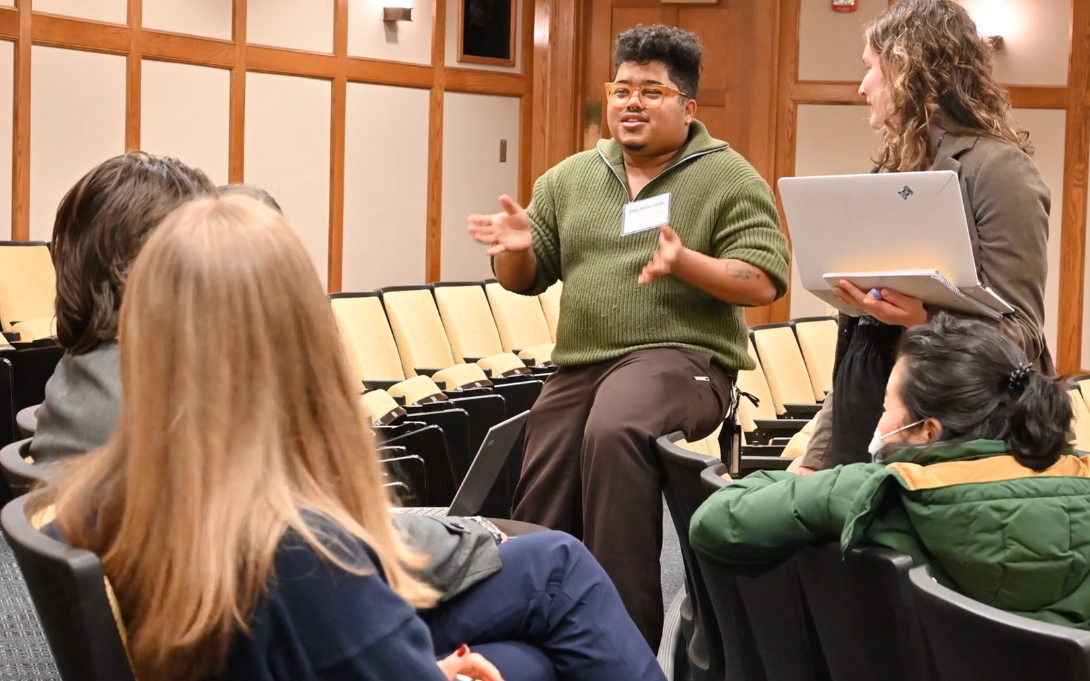
This was the central issue faced by more than 100 master's students during the Ford School's annual Integrated Policy Exercise (IPE), a highly interactive, multi-day simulation. Acting as legislators, local government officials, business and environmental stakeholders, and journalists, students simulated Michigan House Natural Resources and Tourism Committee deliberations on significant legislative reforms—based on SB 246 of 2025—intended to update the state's hazardous waste policy. On the final day, students pivoted to embody residents and leaders from hazardous waste host communities; through a simulated town hall meeting, they evaluated how new legislation would affect their everyday lives and future prospects. Students also had the opportunity to interact with and learn from 27 real-world experts, including U.S. Representative Debbie Dingell, State Senators Darrin Camilleri and Stephanie Chang (co-sponsors of the bill), and Brian Calley, president and CEO of the Small Business Association of Michigan.

"When students take on a role, they have a stake in what happens and advocate for real people in real communities," said Professor Elisabeth Gerber, who has led IPE 13 times since its creation in 2003. "By elevating the emotional attachment to the issue, students remember more, put in more effort, and care about the outcome."
Gerber, along with Graduate Student Instructors Lauren Parker (MPP ‘26) and Pedro Eymael (MPP/SEAS ‘26), chose the topic, developed the course structure, and oversaw the immersive experience.
Wrestling with policy complexity
As students dove deeper into the complexities of the issue, they asked insightful questions and debated potential amendments: How much should fees be raised to disincentivize out-of-state dumping? Could a tax credit offset fees for in-state businesses? Where would those funds come from?
Saravuth Vong (MPP ‘27), who played the mayor of Romulus, said the exercise showed how challenging it is to balance public safety, economic interests, and community concerns at the local level while navigating broader political pressures. Vong added that the real-world experts "highlighted how decisions made at higher levels can overlook local and small-business impacts, underscoring the importance of grounded, long-term policy thinking."
Following heated debate and lobbying, simulated committee amendments stripped most protective measures from the original bills–removing host-community grant funding, lowering fee increases, reducing funding for state environmental oversight, and introducing an industry-friendly tax credit. The amended bill passed on party lines.
"Democrats got a bill. It's not the one they wanted, but they got a bill," remarked Gerber to the students following the vote.
Stakeholders on both sides expressed disappointment or cautious optimism: although the bill's advancement broke a long legislative stalemate, many felt core public health safeguards had been lost.
Learning in action
This year's IPE highlighted the deep partisan and stakeholder divisions over hazardous waste policy, reflecting real-world tensions in balancing economic vitality, regulatory burden, and environmental justice. The simulation offered students first-hand insight into legislative negotiation, coalition-building, and the underlying conflicts between growth and sustainability.
Dixie Samaniego (MPP ‘27), who played Speaker of the House Matt Hall, reflected on the proceedings, "IPE highlighted how important it is not to lose sight of the impact a policy will have while going through the policymaking process. It's easy to see the win as a bill making it out of committee, but the real win is when your policies make a positive impact on people."

"The IPE exercise illustrates how challenging it is to reach consensus and how important coalition building can be," said GSI Lauren Parker. "It really emphasizes why policy is hard to move forward."
Both Parker and fellow GSI Pedro Eymael said they appreciate the value that participating in the simulation for two consecutive years has brought to their own policy journeys.
"It was valuable to hear directly from local government officials about their roles and how they interact with state leaders," said Parker. "As someone interested in exploring a local government career, this exposure gave me insight into the types of people I'd be working with."
Eymael reflected, "On a personal level, I am particularly interested in environmental policy, so learning more about hazardous waste policy and sharing that passion with students was really rewarding. But beyond that, IPE truly offers a chance to put classroom concepts into practice and expand on them in a new setting. We practiced transactional skills that are useful in many contexts—how to negotiate, build interpersonal relationships to support your agenda, present yourself to experts, and develop strategies aligned with your objectives."
"Every year I'm surprised," noted Gerber. "Because we choose a new, relevant topic each year, I get to learn about all the diverging viewpoints and discover the people and communities impacted by these issues."
>>Read Pedro Eymael's behind-the-scenes account of IPE.
