
Research to watch
WHAT'S THE STUDY: University of Michigan researchers will examine whether Michigan's statewide free school meals program is linked to improvements in students' academic performance, attendance, graduation or progression, and discipline outcomes. It will also probe whether the program's effects differ by students' race, ethnicity or economic status to help inform decisions about making free school meals permanent.
WHY IT MATTERS: Research shows children perform better in school when they are well-nourished, and are better able to focus on school, interact with peers and are generally in better health. Recognizing that, the federal government supports several policies to subsidize the provision of nutritious meals to students in schools through various programs.
Research also has shown some families and children don't take full advantage of school meals due to the stigma associated with visible participation in these types of social programs.
After the COVID-19 pandemic, Michigan joined 8 other states that offer statewide universal free school meals programs. The goal of providing free meals to all students in the state is to ensure that all students have access to free, nutritious meals, reduce the stigma associated with the school meals program, and reduce inequality in access to quality food by socioeconomic status.
HOW MUCH AND FOR HOW LONG: The U-M based research team from the Education Policy Initiative received a $1 million, two-year grant from the Institute of Education Sciences to study the program.
WHO'S INVOLVED:
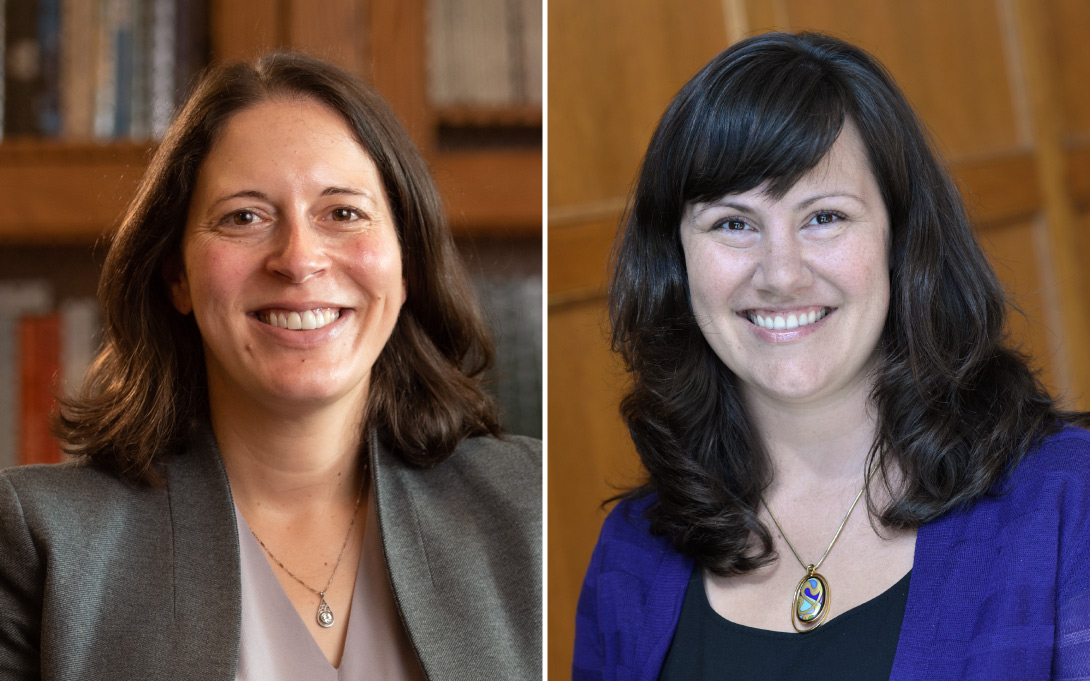
Katherine Michelmore, principal investigator, is a professor of public policy at U-M's Ford School of Public Policy.
"We are still learning about the effects of schoolwide free meals policies, but we know even less about the effects of statewide free meals policies," she said. "Understanding how these policies might impact students—beyond their nutritional intake—is important as other states consider policies like this one."
Natasha Pilkauskas, co-principal investigator, is the associate faculty director of Poverty Solutions and a professor of public policy at the Ford School.
"We are especially excited about our partnership with the Michigan Department of Education," she said. "It is easy to study policies with data and from afar, but having partners who really understand not only the data but what is happening on the ground can really improve the understanding of our research findings."
Deanne Kelleher, co-principal investigator, is director of the Office of Nutrition Services at the Michigan Department of Education. She will provide the research team with the programmatic and policy context for Michigan's statewide free school meals program.
Study: Statewide Free Meals and Student Achievement, Attainment, and Social Well-Being (Award number: R305S260003)
Written by Jeff Karoub, U-M News

