
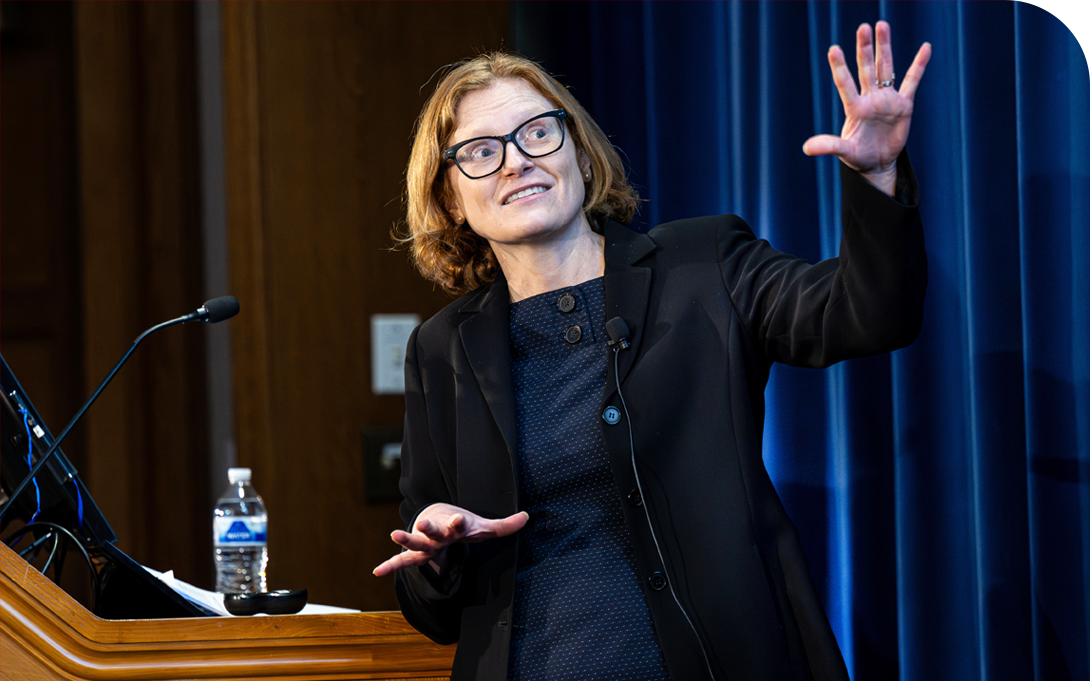
For the Ford School's Christina Weiland, an announcement about school consolidation in West Virginia was personal. The Roane County Board of Education voted 4-1 in favor of consolidating schools that Weiland attended, Geary Elementary and Middle School, and Walton Elementary and Middle School, with schools located in Spencer, West Virginia. Fearful of the impacts school consolidations will have, not just in Roane County, but across West Virginia, Weiland discussed the negative effects on many rural communities.
Weiland wrote her (paywall-protected) opinion piece in the Charleston Gazette-Mail. She pointed to travel complications this will impose on Roane County families. "No child should ever lose their ride to school due to consolidation. If the West Virginia Board of Education approves the Roane County plan on Dec. 10, that is exactly what will happen to over 100 Roane children, or 7% of current enrollment," warns Weiland.
She noted that in complying with state caps on elementary bus times, bus routes will no longer service many homes in the area. "Instead, families will have to drive out to meet the buses at mass bus stops," said Weiland.
"Even worse, there is no plan for families who lack reliable transportation or whose work schedules cannot accommodate meeting the buses," Weiland asserted, highlighting the challenges this alternative will create for low-income and working-class families.
Weiland also mentioned the gaps in analytical reasoning behind calculating bus commutes. Counties are not required to outline how bus times are evaluated in their impact statements. Hence, many of the reported commute lengths are noticeably shorter than the realistic experience, including that of Weilands. "The state Board should not approve consolidation plans without verification of estimated bus times, and the Legislature must establish a consistent, clear method for these calculations," argued Weiland.
Beyond transportation concerns, these consolidations are expected to hurt children in various ways. For example, Weiland anticipates "declines in attendance, achievement, high school and college graduation, and earnings in adulthood." She also blamed consolidations for community economic declines, fraying social ties, and depreciating property values.
"Finally, districts must be prohibited from using consolidation as a quick fix to paper over financial mismanagement," said Weiland. She alluded to motivations for the consolidations as possibly stemming from the district's financial crisis caused by overspending.
